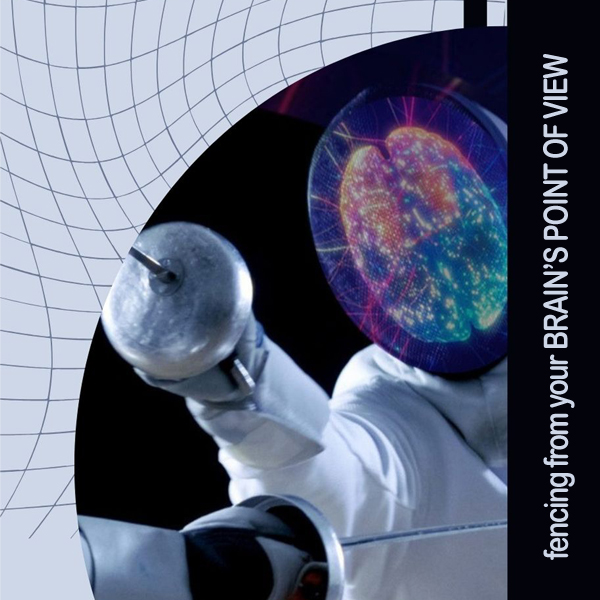
Key to a self directed learning.
Most fencing performances—be it a practice or a game—are filmed and watched by athletes and coaches to refine future athletic performance, helping young fencers develop strategies, beliefs, and self-understanding to excel in their performance.
Metacognition is the ability to think about ones own thinking and knowledge, and it can be a valuable tool for young athletes to help them improve their performance:
- Metacognition involves skills like planning, reflecting, and evaluating. It can also include monitoring one’s thoughts during a performance, and evaluating them afterward.
- Metacognition can help athletes develop the strategies, beliefs, and self-understanding they need to excel. It can also help them approach and solve problems more quickly.
- Metacognition often manifests as self-talk, such as analyzing a performance and identifying what factors contributed to its success or failure.
- Coaches can help athletes develop metacognitive skills by showing film of their previous games and asking questions.
Research considers that metacognitive skills can emerge at the age of 8–10 years, ultimately, older children do exhibit a broader repertoire of metacognitive strategies.
Sports specific metacognitive beliefs and processes may influence the regulation of flow during a competition
- (1)Flow state has been well established as mental state for optimal performance.
- (2)Manifesting flow requires effective self-regulation of attention and cognition.
- (3)Metacognitions have shown to influence attention and flow in athletes.
- (4)Sports-specific metacognitions were associated with various dimensions of flow state.
- (5)Sports-specific metacognitive beliefs predicted self-regulatory ability prior to performances.
- (6)Sports-specific metacognitions predicted the experience of flow during performances.
Love, S., Kannis-Dymand, L. and Lovell, G. P. (2021) ‘Sports-specific metacognitions: associations with flow state in triathletes’, Australian Journal of Psychology, 73(2), pp. 167–178. doi: 10.1080/00049530.2021.1882267.
 Fencing from your brain's POINT of view