Mihaly Csikszentmihalyi, a psychologist from the University of Chicago, coined the term “flow” to describe a state of optimal experience where a person is completely immersed in an activity, feeling a sense of focused energy and enjoyment.
He conducted extensive research, asking people to recall times when they felt their best and performed at their peak, which led him to identify the concept of flow.
When someone is “in the flow,” they are fully absorbed in an activity, often losing track of time and feeling a sense of deep satisfaction
The term was chosen because many people described this optimal state as feeling like they were being carried along by a current, similar to how water flows
When someone is experiencing “flow,”they enter a state of complete absorption in an activity, their stress levels tend to be low, and they typically experience minimal worry or self-reflective thinking, as their focus is entirely on the task at hand.
- It begins with a positive event – for example, in football this could be a really good tackle.
- This positive event then provides the athlete with positive feedback about their physical and mental state, building up to the state of flow.
- Positive feedback leads to an increase in confidence in the athlete.
- More confidence allows the athlete to appraise the situation, setting new challenges and pushing themselves to do something harder or push it up a level.
- Finally, it ends with open goals. These are non-specific and exploratory, and can be focused on the process or the outcome.

The Flow Experience starts with Pre-Conditions
- a balanced challenge-skill level where the fencer has high skills and faces a significant challenge, allowing the fencer to push their abilities while feeling capable
- mental absorption in the task at hand, where the athlete is not distracted by internal thoughts or external factors, experiencing a sense of unity with the activity and their environment
- clear understanding of what success looks like in the specific situation, enables the athlete to direct their actions efficiently towards achieving that goal.
When in Psycologycal State
- To achieve a flow experience, athletes need be free of anxiety and other distractions, and they must be able to block everything around them
- Feeling supreme confidence and in total control of ones performance. With this level of confidence, fencers can exercise control over difficult situations without fear of failure.
- Peak performance is associated with effortless response, and everything seems easy and occurs without thinking or making any extra effort.
Flow transforms time
- Unburdened from disruptive thoughts because ,encers are so thoroughly absorbed in their performance that there is no room for them.
- Flow experience will feel like everything seems to move slower, but when the event is over, the fencer’s perception is that time went incredibly fast during the bout.
- Deeply personal sense of reward and enjoyment
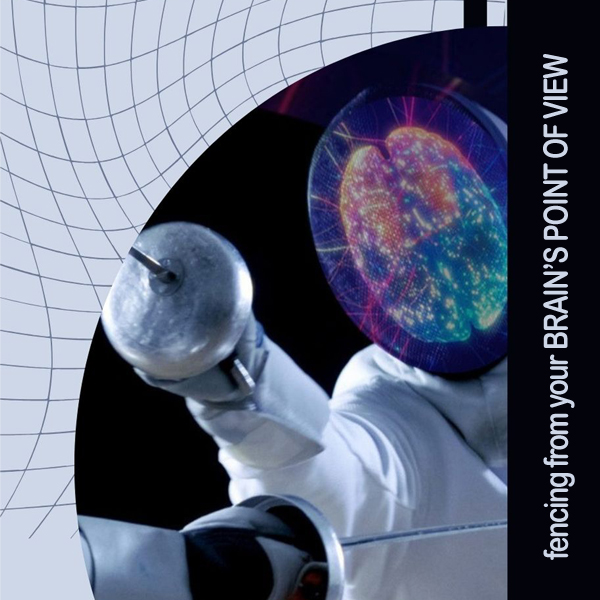
 Fencing from your brain's POINT of view